


How to Source IV Drip Products from China: A Wholesale Buyer's Checklist
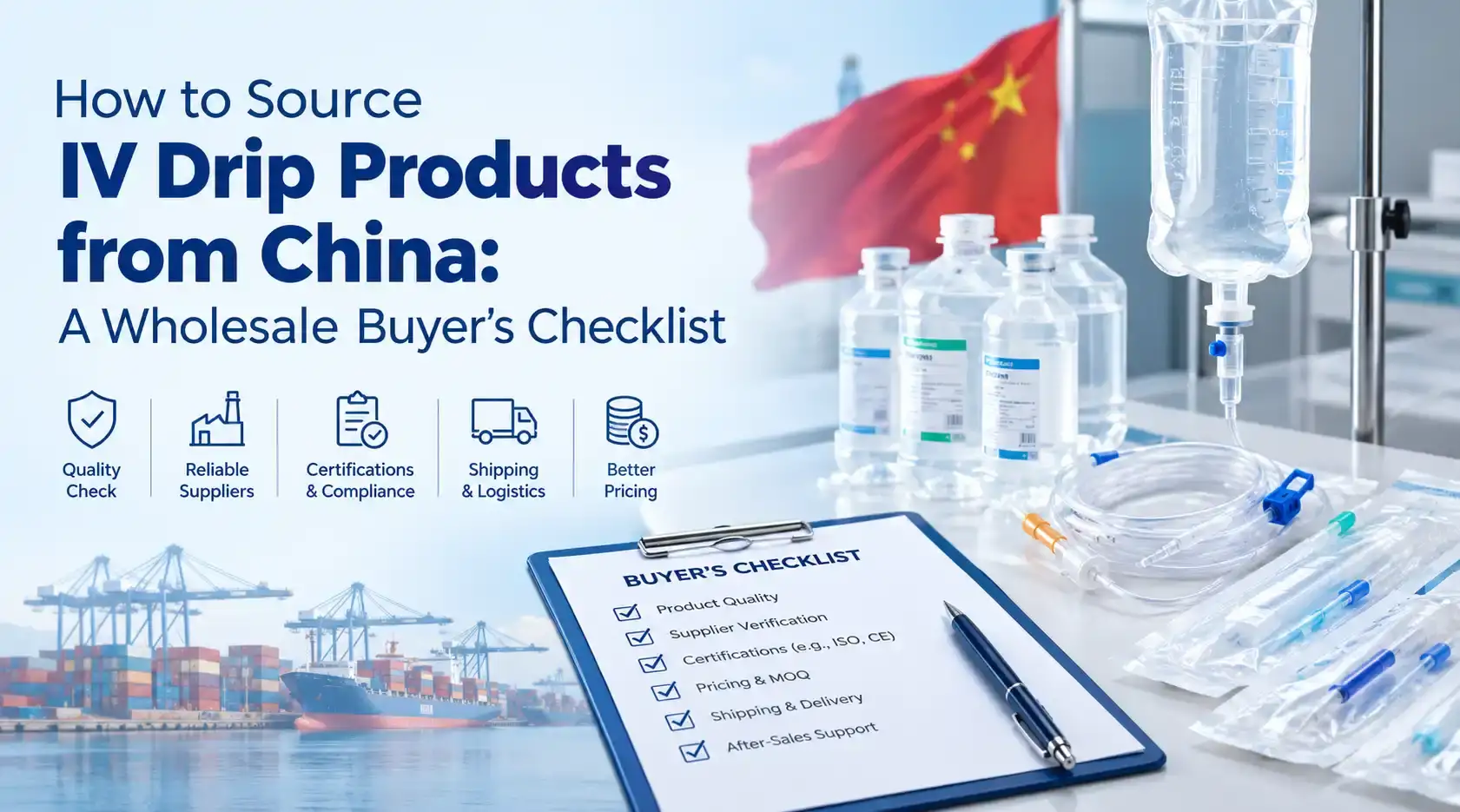
China has become one of the world’s leading suppliers of disposable medical consumables, and IV drip sets are among the most widely exported items in this category. For distributors, hospital suppliers, and clinic chains, sourcing from Chinese manufacturers can deliver strong pricing and reliable volume. However, the process carries real risks, including inconsistent quality, incomplete certification, and suppliers who overstate their capabilities. This guide from Leeyoobeauty walks through a practical, step-by-step checklist so you can evaluate an IV drip set manufacturer in China with confidence before placing a bulk order.
Why Wholesale Buyers Source IV Drip Products from China
Chinese manufacturers have built a mature production base for single-use medical devices, with large cleanroom facilities and well-developed supply chains for tubing, needles, and plastic components. This scale allows competitive pricing on bulk orders, which matters when margins on consumables are tight. Many factories also offer OEM and private label services, letting importers sell under their own brand. The product range is broad, covering standard gravity sets, pediatric sets, vented and non-vented designs, and sets with safety features. For buyers who know what to look for, China offers an efficient and cost-effective sourcing route.
Step 1. Define Your Product Requirements
Before contacting any supplier, decide exactly what you need. Start with the type of set, whether gravity-fed, compatible with an infusion pump, vented, or non-vented. Then list the technical specifications, including drip factor (commonly 10, 15, 20, or 60 drops per milliliter), tubing length, needle gauge, and filter type. Material choices matter too, particularly whether you need PVC or DEHP-free tubing and latex-free components. Finally, consider your target market, because a hospital tender, a wellness clinic, and a government program may each require different specifications. Putting all of this into a one-page specification sheet saves time and ensures every supplier quotes on the same basis.
Step 2. Check Regulatory Compliance and Certifications
Certification is the most important filter in medical sourcing. A credible IV drip set manufacturer should hold ISO 13485 certification for medical device quality management, and CE marking for European markets. If you plan to sell in the United States, you will need to confirm the product's FDA status and registration. Requirements also differ across the Middle East, Africa, Southeast Asia, and Latin America, so check the rules of your destination country early.
Ask for sterilization documents as well, especially ethylene oxide residue test reports, since sterility is central to patient safety. Verifying certificates is just as important as receiving them. Confirm the issuing body, check that the company name matches the supplier, and make sure the certificate scope actually covers IV infusion sets. Expired certificates, mismatched names, or missing product codes are clear red flags.
Step 3. Find and Shortlist Qualified Suppliers
Suppliers can be found through B2B platforms such as TradeWheel, international medical trade shows, industry directories, and referrals from other importers. Whichever channel you use, work out whether you are dealing with a true manufacturer or a trading company. Manufacturers typically offer better control over quality, pricing, and customization, while traders may provide wider variety but less visibility into production. Neither is automatically wrong, but you should know which one you are talking to.
When shortlisting, look at years in operation, export experience, production capacity, and the willingness to share client references. A supplier that answers technical questions clearly and promptly is usually a good sign. Aim to shortlist three to five candidates so you can compare them fairly.
Step 4. Evaluate Supplier Quality Systems
A certificate shows that a system exists, but you still need to understand how it works day to day. Ask how raw materials are inspected on arrival and whether each batch can be traced back to its source. Find out about the cleanroom production environment and its classification, and how in-process and final inspections are carried out. Batch records and lot tracking should be standard practice.
It also helps to ask about common defects directly, including leakage, clamp failure, air bubbles in the line, and needle bluntness. A manufacturer confident in its process will explain how these issues are prevented and caught. If possible, arrange a factory audit yourself, or hire a third-party inspection company such as SGS, TÜV, Bureau Veritas, or Intertek to visit on your behalf.
Step 5. Request and Test Samples
Never commit to a bulk order without testing samples. Ask for samples taken from the actual production line rather than specially prepared units, because only these reflect what you will receive later. Once they arrive, test them for flow rate accuracy, leak resistance, tubing flexibility, and connector fit. Check that the drip chamber works smoothly and the roller clamp holds its position.
Review the packaging and labeling as well, looking at language, expiry date format, lot number, and the sterilization indicator. Sample costs and timelines vary by supplier, but most manufacturers can provide samples within one to two weeks. Treat this stage as your best opportunity to catch problems cheaply.
Step 6. Understand MOQ, Pricing, and Lead Times
Minimum order quantities for IV drip sets are usually high, because production runs are large and sterilization is done in batches. MOQs often rise further when you request custom packaging or branding. Pricing depends on materials, component quality, packaging, certifications, and order volume, so a very low quote deserves scrutiny rather than excitement.
Lead times differ between stock items and OEM orders, with custom production generally taking longer. Discuss payment terms early, whether telegraphic transfer, letter of credit, or a deposit with balance before shipment. Also ask about hidden costs such as tooling, artwork setup, laboratory testing, and inspection fees, so the final landed cost holds no surprises.
Step 7. Plan for OEM and Private Label
If you intend to sell under your own brand, clarify the OEM process before you sign anything. This includes custom packaging, instruction leaflets, and the artwork approval workflow. Labeling must meet the regulations of each destination market, including required symbols, languages, and registration numbers. It is also wise to sign a confidentiality agreement and clarify intellectual property ownership, so your brand designs and specifications are protected.
Step 8. Arrange Packaging, Shipping, and Customs
Sterile medical products need careful export packaging to protect the sterile barrier during long transit times. Discuss whether sea freight, air freight, or consolidated shipments best suit your volume and budget. Because IV sets have a limited shelf life, confirm storage conditions during transit and make sure enough shelf life remains on arrival.
Agree on the Incoterms with your supplier, commonly FOB, CIF, or DDP, so responsibilities for cost and risk are clear. Prepare the required import documents, which usually include the commercial invoice, packing list, certificate of origin, certificate of conformity, and sterilization certificate. Working with an experienced freight forwarder familiar with medical goods can prevent costly customs delays.
Step 9. Set Up Quality Agreements and After-Sales Support
Once you have chosen a supplier, formalize expectations in a written quality agreement that includes the signed product specification. Arrange a pre-shipment inspection before releasing final payment, and confirm how complaints, replacements, and returns will be handled. For repeat orders, continue checking batch consistency, since quality can drift over time if no one is watching. A reliable manufacturer will welcome this structure, because it protects both sides.
Complete Wholesale Buyer's Checklist
To summarize, a careful buyer should have defined the product specifications, verified the ISO 13485, CE, and FDA documents, and confirmed whether the supplier is a true manufacturer. Samples should be tested and a factory audit or third-party inspection completed. The MOQ, price, and lead time should be agreed in writing, packaging and labeling approved, shipping terms settled, and import documents prepared. Finally, a signed quality agreement should be in place before the first bulk shipment leaves the factory.
Common Mistakes to Avoid
The most frequent mistake is choosing the lowest price without checking certifications, which can lead to rejected shipments or safety problems. Skipping sample testing is another costly error, as is failing to confirm the supplier's real manufacturing capability. Buyers also overlook destination-country labeling rules or forget to plan for shelf life and storage, resulting in stock that cannot be sold. Avoiding these five errors alone will put you ahead of many first-time importers.
Frequently Asked Questions (FAQ's)
Is it safe to buy IV drip sets from China?
Yes, it can be safe when you work with certified manufacturers. Verify ISO 13485 and CE documents, test production samples, and consider a factory audit or third-party inspection before placing a bulk order.
What certifications should a Chinese IV drip set manufacturer have?
At a minimum, look for ISO 13485 and CE marking, plus FDA registration if you sell in the United States. Also request sterilization validation reports and confirm each certificate covers IV infusion sets.
What is the typical MOQ for wholesale IV drip sets?
MOQs are generally high because of batch production and sterilization. The exact quantity varies by manufacturer and rises with custom branding or packaging, so request a clear MOQ for both standard and OEM orders.
Can Chinese manufacturers provide OEM or private label IV drip sets?
Yes, many manufacturers offer OEM and private label services, including custom packaging, labeling, and instruction leaflets. Confirm artwork approval steps, destination-market labeling rules, and confidentiality terms before production begins.
Conclusion
Sourcing IV drip sets from China can be profitable and dependable when you follow a structured process. By defining your requirements, verifying certifications, testing samples, and securing a clear quality agreement, you reduce risk and protect your brand reputation. The best results come from partnering with a certified, export-experienced manufacturer who is open about its processes and ready to support long-term supply.
Ready to Source IV Drip Products?
If you are looking for a dependable supplier, explore our range of IV drip sets or contact our team to request a quote, product catalog, or samples. Visit our IV drip set manufacturer page to learn more about specifications, certifications, and OEM options for wholesale IV drip sets.
Featured Articles
Leave Your Comments
LEEYOO LAB

Have a question or need a quote? Fill out this form and our team will get back to you quickly!